 |
| Women selling Tamales Alexander Silva |
 |
| Zero Tolerance John Moore |
|
| Women selling Tamales Alexander Silva |
|
| Zero Tolerance John Moore |


 In 1997, Lauren Greenfield began documenting the lives of patients at the Renfrew Center in Coconut Creek, Florida. Renfrew is a forty bed residential facility that treats women with eating disorders. Greenfield was given unprecedented access to film the daily lives of patients. She created “Thin”, a photographic essay and documentary film about the treatment of eating disorders. “Thin” gives a view into the complicated and difficult process of treatment, the culture of rehab, and the experience of struggling with an eating disorder. The four photos installed in the gallery are only a small portion of this bigger project, but the message is still clear. It is not just about food or body image, but the web of personal, familial, cultural, and mental health issues in these women’s lives and many around the world who suffer from an eating disorder or mental disorder in general. Just like anxiety, eating disorders, especially in women, is all too common. One in seven women has an eating disorder and 64% of college-aged women have experienced eating disorder symptoms. Anorexia, with a mortality rate of 10%, is the
  Not only did I love how the four pictures in this installment were of women, but that they included a woman of color. There is a stigma on mental disorders overall, but there is also a stigma regarding mental illness among people of color. “If one takes a step back, then, it's clear that social and cultural capital provide valuable insight into the power disparities that emerge from differences in race, class, gender, and cultural and geographical differences” (Seeing Power). People are quick to label a white person mentally ill in cases of mass shootings, but if this person was of color it would be a different story. In instances like this it infuriates me that mental illness is used as a way to get out of a crime. On the other hand, if it were a person of color who committed the crime, mental illness wouldn’t even make its way into the conversation.
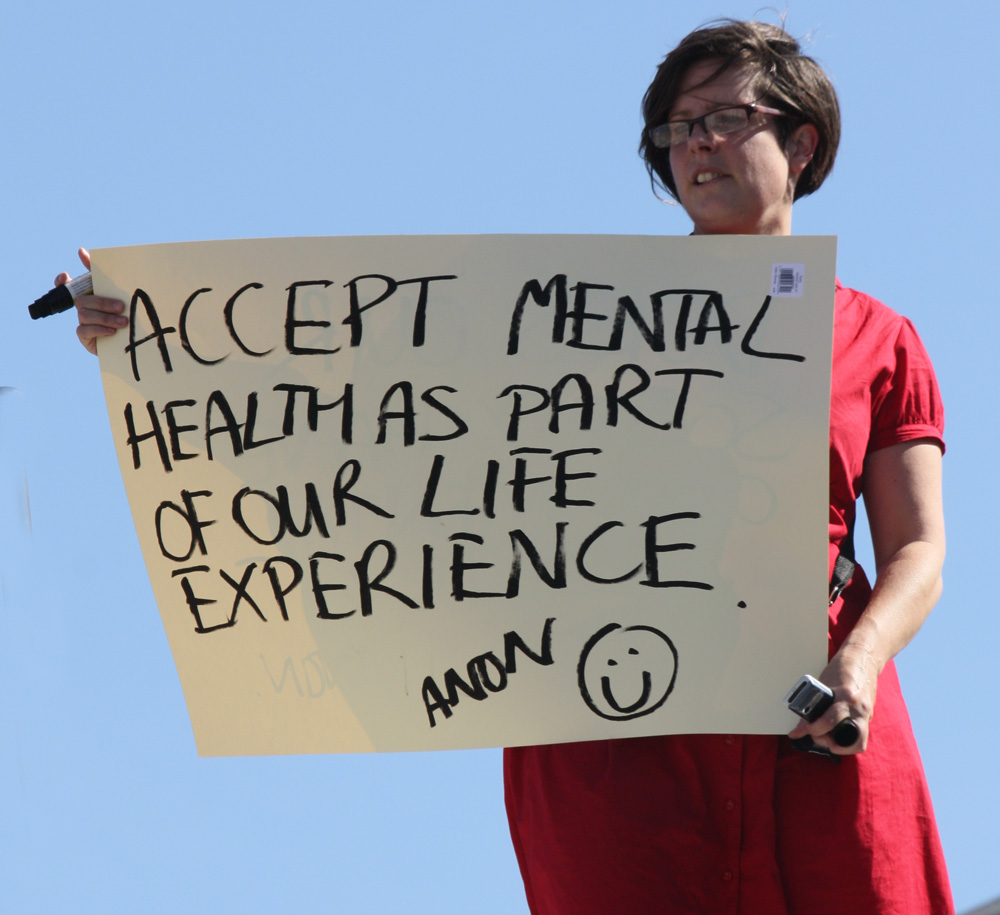
  The piece by Ella Halpine also stuck out to me. Halpine is a senior studio art major at the University of Vermont. Initially she was an environmental studies major with interests in sustainable agriculture. After taking an introductory drawing class, then graphic design, she switched to a studio art major. Halpine completed an independent study pursuing the relationship between art and food justice. She says, “Eating organic and eating local are really important, but the rhetoric can come off as shaming those who can’t afford the pricier options. The focus first needs to be on ensuring food accessibility and affordability before we can focus on promoting organic and local food.” In recent years society has put so much importance on eating ‘organic’ and locally sourced food, but that comes at a high price. Most are not able to maintain that type of lifestyle. Like she says, instead of shaming those who can’t afford these ‘healthier’ ‘pricier’ options, we need to focus on making these food options more accessible and affordable. In connection with mental health, there is a shame that people who suffer from these disorders, experience. There is a feeling of not being accepted and a fear of being judged, so we stay silent. We battle internally. Like Halpine’s poster says, there is no shame in asking for help, but of course society continues to make us feel as if we should feel ashamed.
 Our class went on a field trip to Paul Robeson Galleries at Rutgers University. The exhibit they have is called “Feast & Famine”. “Feast & Famine” explores food as a social, political and bodily experience. This whole exhibit is to enlighten people about the importance of food and the cost of plastic in the environment. Even if this does not relate to my topic, one of the exhibits that caught my eye is from one of the series of “Thin”. This caught my attention because this is one of the problems that everyone is facing. Obesity and eating disorders are still going on today and without proper treatment the people who suffer from these will not experience having a normal life. However, with people who suffer from these problems seek for help their transformation will give hope to others who does not look for help. Going around the exhibit I did not really find much for my project because the exhibits that were displayed were mostly about food and nothing really about the Ocean. The closest artwork I found close to my project are “Water Bottles” by Willie Cole and “Water is Life” by Nicolas Lampert. These artworks were the only ones I am able to relate for my project.


 The feast and famine Exhibition was very insightful. The two pieces I decided to choose was the liberation of lady J and UB by Renee, and the rap on race with rice by Dominic Duroseau. These two pieces speak volumes when it comes to liberation and racial stereotypes. Renee cox art piece is the epitome of black liberation. Renee cox is centered in the art piece she is grabbing a man and a woman by the arm. On the woman side is the Aunt Jemima logo and in the man side the Uncle Ben logo. When America was a more racially tense nation the mammy figure was a representation of women of color all over the nation. The mammy figure was to stereotype a black woman and to say that it is her pleasure to serve white people, Uncle ben was also a symbolism of servitude to the white man both of these symbols were derived from the enslavement of the African American. More detail in the piece. The man and the woman in the art work were half naked which symbolized that they were stripped of the stereotypical isms that are and were placed on them just for being a man and woman of color. Renee cox use a muscular man and woman to show the strength,power and beauty of the black man and woman. The connect to my project because it would be piece that bring Black Gay men out of the stigmas that are attached to the HIVvirus. The piece will break the labels that have been on Black gay men with HIV. My project will humanize the disease and reveal that Black gay men who've HIV are the same as everybody else. Dominique Dorseau Artwork shows images of Great black Americans and heroes.

